The Many Faces of Hamlet
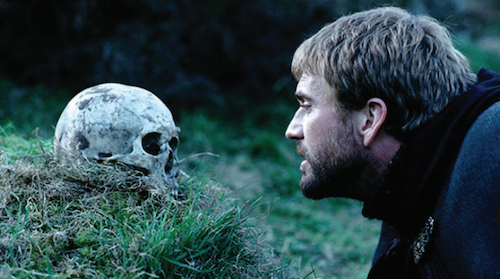
What is Hamlet? A (failed) revenge tragedy? A political play? An existential drama? A vehicle for the culmination of a Shakespearean actor’s career? The play that seems like it may never end? T.S. Eliot called Hamlet “the Mona Lisa of literature” marking it as intensely enigmatic and culturally iconic, but, ultimately, an artistic failure. Over three sessions, Joseph Campana, the William Shakespeare Professor of English at Rice University, will examine the many faces of Hamlet on the screen. What did Franco Zeffirelli, Kenneth Branagh, or Vishal Bhardwaj want from this mysterious if frustrating masterpiece? We will also consider moments when Hamlet is present even when absent—through allusion
or parody—or even when Hamlet is the backdrop for other dramas, as in Maggie O’Farrell’s novel Hamnet and Chloé Zhao’s film adaptation.
Joseph Campana is a poet, arts writer, and scholar of early modern English and European literature and culture and the environmental humanities. In addition to his named chair in the English department, he is director of the Center for Environmental Studies at Rice University. Professor Campana is the author of two scholarly monographs: The Pain of Reformation: Spenser, Vulnerability, and the Ethics of Masculinity (Fordham University Press, 2012) and Shakespeare’s Once and Future Child: Speculations on Sovereignty (University of Chicago Press, 2025). He is the author of three collections of poetry: The Book of Faces (Graywolf, 2005), Natural Selections (2012), which received the lowa Poetry Prize,
and The Book of Life (Tupelo, 2019) and is contributing editor at Plume for which he writes a monthly column. Professor Campana has also served as an arts writer and critic for web and print publications (including CultureMap, the Houston Chronicle, the Kenyon Review, and the Los Angeles Review of Books) covering theater, dance, visual arts, television, books, and more.
Related products
-
What Would the Founding Fathers Think?
-
Hem and Her: American Female Designers at the HCC Fashion Archives
-
Behind the Headlines: Russia, Venezuela, and Turkey
-
An Architectural Walking Tour of Rice University