Houston’s History through Homes
TWO TUESDAYS, FEBRUARY 10 AND 17, 6:00–7:30 P.M
RICE UNIVERSITY. DIRECTIONS WILL BE PROVIDED TO SUBSCRIBERS.
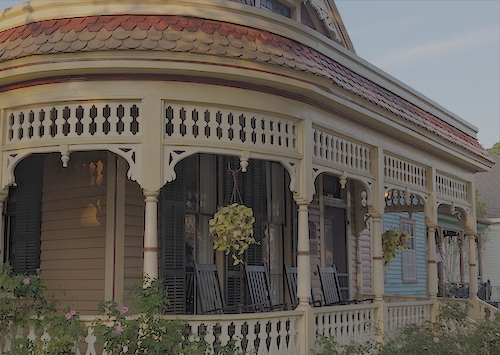
Join Stephen Sherman, housing researcher and scholar at the Kinder Institute at Rice University, as he tells the economic history of Houston through 19 homes, some of which are still standing today. These houses all reflect not only cultural expectations about the home and the family, but Houston’s evolving orientation to the local and global economy. Mr. Sherman will chart Houston’s evolution from agrarian market town, to railroad logistics hub, to oil boomtown, to the diverse global economic hub it is today. Of emphasis are not necessarily the houses of “great Houstonians,” but everyday working people’s homes, which are concrete, physical manifestations of a specific economic and cultural order in which they lived.
February 10: In the first session, we will cover key concepts for understanding urban political economy through housing. We start with Houston homes from pre-colonial history until the early twentieth century.
February 17: The second session picks up with the post-World War II suburban housing boom, explaining both its causes and effects, and ends with contemporary homes and how they indicate contemporary threats to Houston’s seemingly forever growth.
Stephen Sherman is a research scientist at the Kinder Institute for Urban Research’s Center for Housing and Neighborhoods at Rice University. He regularly appears on local news programs, such as Houston Public Media’s Houston Matters, as an expert on local housing topics. Mr. Sherman has published in both peer-reviewed journals and through the Kinder Institute, where he is the lead researcher for the yearly “State of Housing in Harris County and Houston” report. He has a PhD and masters in Urban Planning from the University of Illinois at Urbana-Champaign and a BA in American Studies and English (with a creative-writing emphasis) from the University of Iowa.
Related products
-
Tipping the Balance: Women Legislators, Reporters, and Voters
-
Spring 2022 Study Tours
-
From Poverty to Prosperity: The Real Energy Transition
-
Politics Report Card: The U.S. Congress, the Biden Presidency, and the Lone Star State